Fear and Change
Why Your Greatest Growth Begins Outside Your Comfort Zone.
7/12/20265 min read
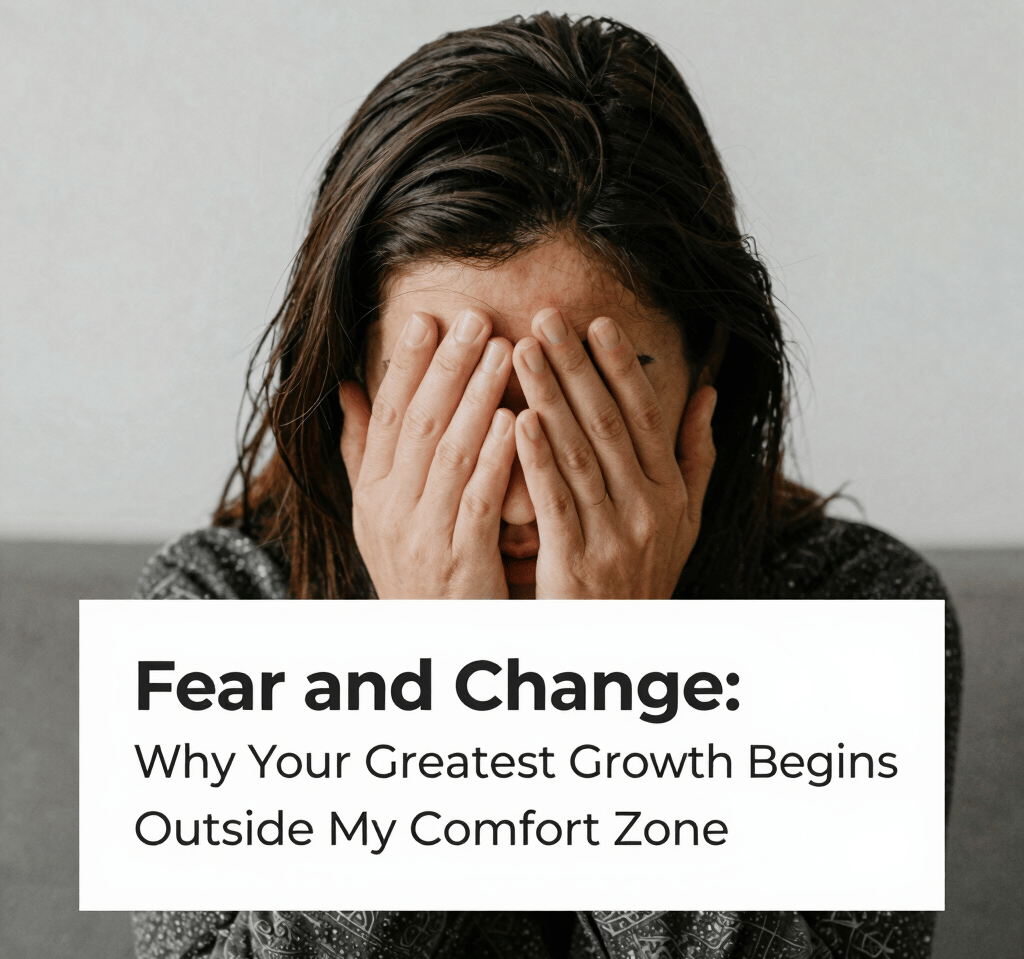
Fear and Change: Why Your Greatest Growth Begins Outside Your Comfort Zone
"Everything you've ever wanted is sitting on the other side of fear."
While the exact origin of this quote is debated, its message resonates because it reflects a universal truth: growth requires change, and change often feels uncomfortable.
Whether you're starting a new career, ending a relationship, moving to a new city, launching a business, or simply trying to become a better version of yourself, fear often appears first. It whispers that you're not ready, that you'll fail, or that it's safer to stay where you are.
From a scientific perspective, fear is a natural survival mechanism designed to protect us from danger. From many spiritual perspectives, fear is viewed differently—not as an enemy, but as a signal that we are standing at the edge of growth.
Perhaps the most powerful transformation happens when we learn not to eliminate fear, but to move forward despite it.
Why We Fear Change
Our brains are designed to seek familiarity.
Deep within the brain, the amygdala constantly scans our environment for potential threats. Thousands of years ago, this helped our ancestors survive predators and other dangers. Today, however, the same system can react to non-life-threatening situations such as public speaking, changing careers, or trying something new.
To the brain, uncertainty often feels like risk.
That explains why we sometimes stay in situations that no longer serve us—a job we dislike, unhealthy relationships, or routines that leave us unfulfilled. Familiar discomfort can feel safer than unfamiliar possibility.
Fear itself isn't the problem. It becomes limiting only when it keeps us from pursuing the life we truly want.
The Comfort Zone: Safe but Limiting
The comfort zone isn't necessarily a bad place. It provides stability, routine, and predictability.
The challenge is that growth rarely occurs there.
Every significant milestone in life involves stepping into uncertainty:
Learning to walk
Driving a car
Starting a new job
Falling in love
Becoming a parent
Launching a business
Following a lifelong dream
Each required courage before confidence.
Confidence doesn't usually come first. It develops through action.
A Spiritual Perspective on Fear
Many spiritual teachings describe fear as the opposite of love—not because fear is "bad," but because it narrows our perception.
Fear often tells us:
You're not good enough.
You'll fail.
People will judge you.
Stay where it's safe.
Don't take the risk.
Love, on the other hand, encourages expansion. It invites curiosity, creativity, compassion, and trust.
Many modern spiritual philosophies suggest that fear is not who we are but rather a temporary emotional state. They propose that our deeper nature is one of connection, creativity, and possibility.
From this perspective, moments of fear often arise just before significant personal growth. Rather than viewing fear as a stop sign, it can become an invitation to explore what lies beyond our current limitations.
Change Is a Natural Law
Nature demonstrates that change is constant.
The seasons shift.
Trees shed their leaves.
Rivers carve new paths.
Cells in our bodies are continually replaced.
Nothing in nature remains exactly the same forever.
Yet humans often resist change because we seek certainty in an uncertain world.
Ironically, resisting change can create more suffering than the change itself.
When we accept that change is a natural part of life, we begin working with life's flow instead of against it.
The Stories We Tell Ourselves
One of the greatest sources of fear isn't reality—it's the story we create about reality.
For example:
"I'll embarrass myself."
"No one will support me."
"I'm too old."
"I'm too young."
"I'm not qualified."
"What if I fail?"
These thoughts often feel like facts, but they are usually predictions about events that haven't happened.
Psychologists refer to these as cognitive distortions—patterns of thinking that exaggerate danger or underestimate our ability to cope.
Learning to question these stories can be incredibly freeing.
Ask yourself:
Is this thought actually true?
What evidence supports it?
What evidence challenges it?
What's the most realistic outcome?
Even if things don't go perfectly, can I handle it?
Often, the answer is yes.
Growth Requires Uncertainty
Think back to a time when you experienced major personal growth.
Perhaps you:
Changed careers.
Started a business.
Ended an unhealthy relationship.
Returned to school.
Moved to a new city.
Learned a new skill.
At the time, it probably felt uncertain.
Looking back, it may now seem obvious that those challenges helped shape who you are today.
Growth rarely feels comfortable while it's happening.
Practical Ways to Move Through Fear
Fear doesn't disappear overnight, but we can learn to respond differently.
1. Take One Small Step
You don't have to solve everything today.
Instead of focusing on the entire mountain, identify the next step.
Small actions create momentum.
Momentum builds confidence.
2. Practice Mindfulness
Fear often lives in imagined futures.
Mindfulness gently brings attention back to the present moment.
Simple breathing exercises, meditation, or quiet reflection can reduce stress and help you respond thoughtfully instead of reacting automatically.
3. Limit Negative Input
Our minds are influenced by what we consume.
If your days are filled with constant negative news, endless social media comparisons, or pessimistic voices, fear can become amplified.
Choose books, podcasts, conversations, and communities that encourage growth and balanced thinking.
4. Focus on What You Can Control
We cannot control everything.
We can control:
Our attitude.
Our preparation.
Our effort.
Our response.
Our willingness to keep learning.
This shift in focus often reduces anxiety.
5. Celebrate Progress
Many people wait until they reach the finish line before acknowledging success.
Instead, celebrate each step forward.
Progress—not perfection—is what creates lasting change.
Turning Fear Into Curiosity
One helpful way to reframe fear is through curiosity.
Instead of asking:
"What if I fail?"
Try asking:
"What might I learn?"
Instead of asking:
"What if people judge me?"
Ask:
"What opportunities might open if I try?"
Curiosity softens fear and creates room for possibility.
Trusting Yourself
Many spiritual traditions encourage people to develop a deeper relationship with their inner wisdom.
Whether you call it intuition, your higher self, inner guidance, or simply your conscience, learning to listen inward can provide a sense of stability even when external circumstances are uncertain.
This doesn't mean ignoring logic or evidence. Rather, it means combining thoughtful decision-making with self-awareness and reflection.
Over time, confidence grows not because life becomes predictable, but because you develop trust in your ability to navigate whatever comes next.
Embracing Change with Purpose
Every season of life brings change.
Some changes are chosen.
Others arrive unexpectedly.
While we cannot always control our circumstances, we can choose how we respond.
Fear may always accompany meaningful change, but it doesn't have to make our decisions.
When we approach uncertainty with courage, openness, and a willingness to learn, we often discover strengths we didn't know we possessed.
The greatest opportunities in life rarely come wrapped in certainty. They often arrive disguised as challenges, new beginnings, and unfamiliar paths.
Final Thoughts
Fear is part of being human. It has helped our species survive for thousands of years.
But the same instinct that protects us can also keep us from becoming the person we are capable of being.
Science teaches us that fear is a natural response designed to keep us safe.
Spiritual teachings remind us that courage is not the absence of fear but the willingness to move forward with faith, hope, and purpose.
Perhaps the goal is not to eliminate fear altogether.
Perhaps the goal is to thank fear for trying to protect us, then gently take the next step anyway.
Every meaningful journey begins with a single decision—the decision to move forward.
And on the other side of that decision, you may find not only the life you've been seeking but also a deeper understanding of your own resilience, strength, and potential.
Change is inevitable.
Growth is a choice.
The next chapter of your life is waiting. All it asks is that you take the first step.
Reviews
Honest product reviews to help your decisions.
Contact
contact@justasec.me
© 2025. All rights reserved.